The Heart of a Single Flower (2025)
Tranquilo Bay Artist Residency, Isla Bastimentos, Bocas del Toro, Panama — released February 4, 2026
The Heart of a Single Flower is a four-part audiovisual cycle created during an artist residency at Tranquilo Bay on Isla Bastimentos, in the Bocas del Toro archipelago of Panama. The works bring together field recordings, microtonal harmonica, flute, shakuhachi-like breath textures, detuned piano, tropical rain, birdsong, and moving island imagery. Across the cycle, what began as an exploration of density and layered harmonic presence gradually opened into drift, atmosphere, weather, and contemplative space.
The poetry of Ikkyū Sōjun accompanies the cycle throughout. His images of flowers, wind, floating grass, and compassionate rain became quiet companions during the residency, offering a poetic frame for works rooted in impermanence, attention, and the movement of natural forces. Recorded on Isla Bastimentos and nearby islands including Isla Popa, Crawl Cay, and Isla Venado, the project listens for a musical form already present in weather, water, and passing time.
Video Works
1. Only a Flower 花一輪
Shakuhachi & 23-limit harmonica — a meditation on density and space, Panama, 2025
花一輪 咲いても散っても 春は春
Hana ichirin / saite mo chitte mo / haru wa haru
“A single flower — whether it blooms or falls, spring is still spring.”
— Ikkyū Sōjun 一休宗純
This piece began with an intention: to explore density — layers of sound stacked and woven together, retuned microtonal harmonicas forming a living fabric against the pulse of jungle life. The early sketches imagined a cloud of tones, harmonicas folded upon one another, swelling over the cries of birds and the hum of insects.
But something unexpected happened. The density sought at the outset dissolved into space — a space not empty, but alive, a place where presence itself could breathe. Within that opening, Ikkyū’s words became a quiet companion, a reflection on time, memory, and the many pasts that surface when one stops searching for weight and simply listens. The music is anchored by a shakuhachi-like breath beneath a 23-limit harmonica tuned in a minor mode — the same tuning that forms the harmonic language of Old Pine and two in-progress piano projects. Beneath this lies a soft 5-tone equal-temperament pad, an elemental counterbalance to the harmonic complexity above it, while birds and insects form their own living counterpoint.
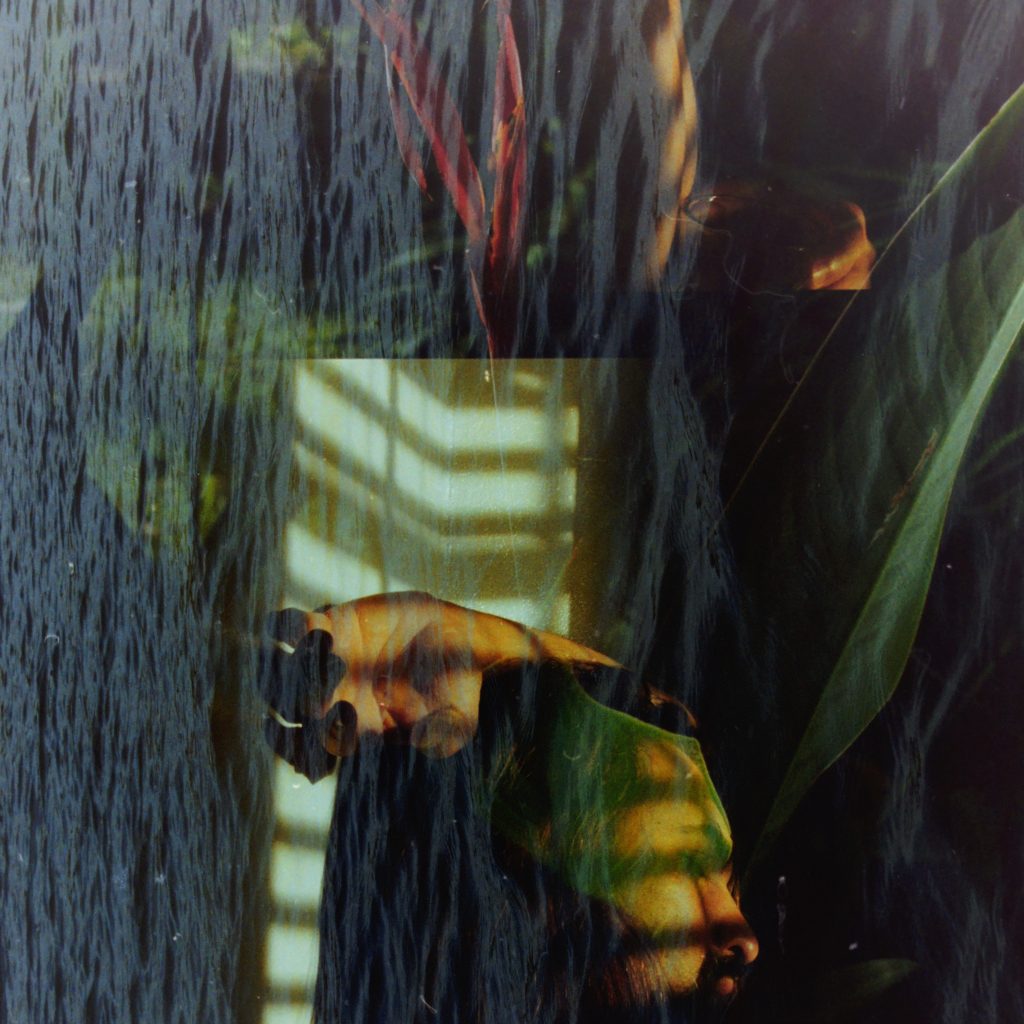
The accompanying visuals — double-exposure photographs of tropical flowers — mirror this transformation. What began as a study of density became a meditation on impermanence, a search for stillness within abundance, and a reminder that even in complexity, there is always space to bloom.
2. The Wind Has No Mind 風に心なし
Tambin & birdsong meditation — Tranquilo Bay Artist Residency, Panama, 2025
風に心なし 花は自ら咲き 月は自ら満ち欠ける
Kaze ni kokoro nashi / hana wa mizukara saki / tsuki wa mizukara michikakeru
“The wind has no mind.
The flower blooms by itself.
The moon waxes and wanes on its own.”
— Ikkyū Sōjun 一休宗純
This second piece from the residency was originally titled Bird Calls, both in tribute to Charlie Parker and in response to its dialogue with the oropendolas and other birds of the area. It is played on three tambin flutes, a Fulani instrument whose style and phrasing here recalls certain qualities of bebop, especially in the movement and agility of the melodic lines.
The piece became a dialogue with wind, birds, local life, and the echo of the voice through breath — less a fixed composition than a passage through the sonic life already present on the island.
3. Floating Without Roots 根なき浮草
Harmonica, detuned piano & island soundscape — Tranquilo Bay, Panama, 2025
根なき浮草 水のまにまに漂いて
流れにまかせて行方知らず
Ne naki ukigusa / mizu no manimani tadayoite / nagare ni makasete yukue shirazu
“Rootless floating grass,
drifting wherever the water leads —
carried by the current, its destination unknown.”
— Ikkyū Sōjun 一休宗純
This piece is a meditation on drift — on being carried rather than directed. A harmonica lead moves slowly through a near-seven-tone harmonic field, not fixed to a strict temperament, floating above a detuned piano recording made the previous year. The piano behaves like memory here: slightly unstable, already loosening, its harmonies shifting like tides beneath the surface. Together, the harmonica and piano move as overlapping currents — one present, one recalled — neither fully grounding the other.
Around these layers, field recordings of birds, wind, and water recorded at Tranquilo Bay continue to flow. Sounds enter and recede, stretch into long trails, and dissolve into one another, blurring the boundary between foreground and environment. The visual material was recorded on Isla Bastimentos and across the surrounding islands of the Bocas del Toro archipelago, including Isla Popa, Crawl Cay, and Isla Venado. Ikkyū’s image of ukigusa, floating grass, became especially resonant in the mangrove vegetation: rooted and unrooted at once, anchored yet drifting with tides, shaping and reshaping the water around them.
4. Even Rain Is Compassion 雨さえ慈悲なり
5-limit just intonation harmonica & soundscape — Tranquilo Bay, Panama, 2025
雨さえ慈悲なり 草木を潤し
行く人の袖を濡らす
Ame sae jihi nari / somoku o uruoshi / yuku hito no sode o nurasu
“Even rain is compassion —
moistening the trees and grasses,
wetting the sleeves of those who pass.”
— Ikkyū Sōjun 一休宗純
This final piece in the cycle turns entirely toward rain — rain as texture, rain as rhythm, rain as presence. Recorded during a heavy aguacero on Isla Bastimentos, the storm shapes the piece from the ground up. Against this shifting curtain of water, several takes of a pre-war harmonica tuned in 5-limit just intonation are layered together. This tuning, the long-standing historical standard for harmonicas for much of the 20th century, gives the instrument a warmth and immediacy that feels alive inside the rain.
There is also a quiet lineage here. The work gently revisits Ending Credits / Dolores from the Bad Canada self-titled album — a piece shaped around the breath and ebb of an imagined rainstorm, performed on the 30-tone piano of Julián Carrillo in San Luis Potosí. In Even Rain Is Compassion, the storm is no longer imagined: it is the environment itself, the pulse of the island, the frame in which breath and tone find their shape. Ikkyū’s poem suggests that even what falls heavily is a form of renewal — a way the world continually restores itself.




 Noah Dean Jordan